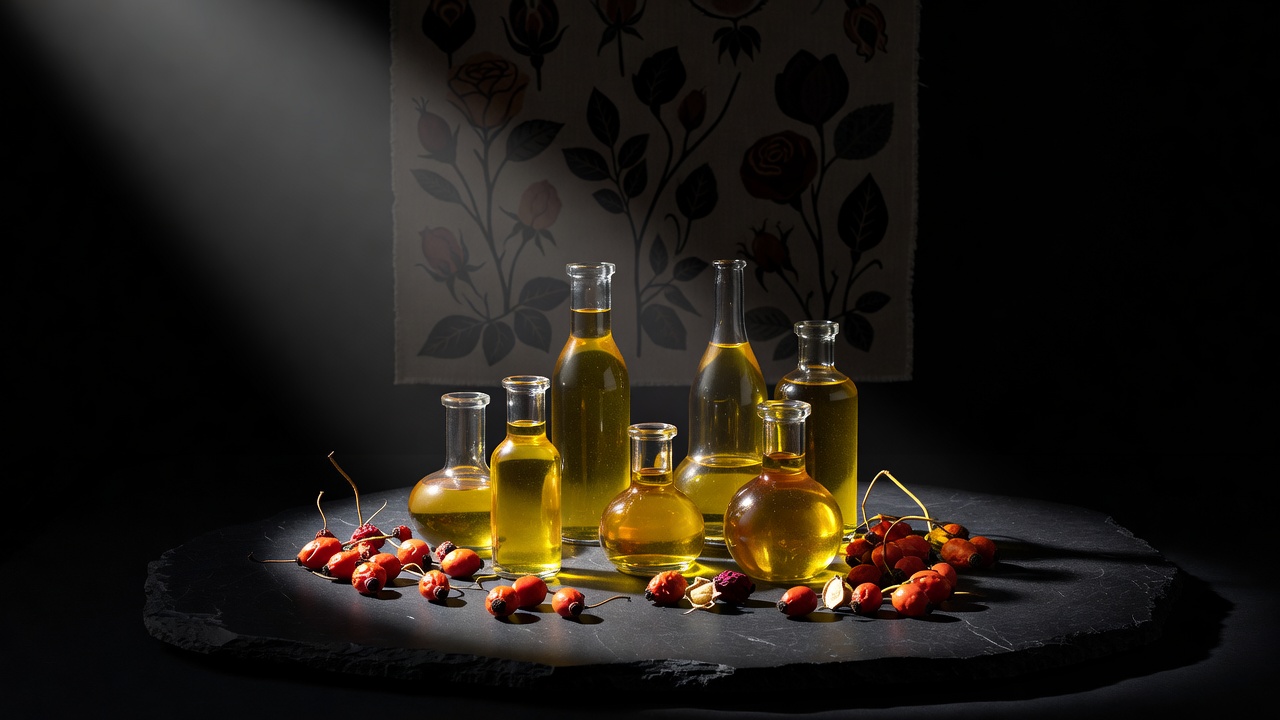
Rosehip seed oil
8.6
Buy, then refrigerate.
INCI: Rosa Canina Seed Oil. High in linoleic and alpha-linolenic acids, light, and gone from the surface in under a minute. The orange tint comes from carotenoids; a crystal-clear rosehip oil has been refined. The downside is chemistry: polyunsaturated fats oxidise fast. A rancid bottle smells like old crayons and does not belong on your face. Buy 30 ml, keep it cold, finish it within three to six months of opening.
Jojoba
8.4
Buy. The low-drama choice.
Technically a liquid wax ester, not a triglyceride oil, which makes it very stable. Bottles last a year or more. Wax esters also make up a large share of human sebum, which may be why jojoba feels less greasy than its reputation. Good for oily and combination skin as a light sealant, and excellent for melting sunscreen off at night. Golden jojoba is unrefined, clear is refined. Both work.
Squalane
8.3
Buy. Nothing to report, which is the point.
Squalane is hydrogenated squalene. Squalene occurs in sebum but oxidises easily; hydrogenation makes it shelf-stable. It was historically taken from shark liver. Most squalane sold now comes from olives or sugarcane, and a decent brand will say which on the box. If it does not say, ask. Weightless, unscented, plays well under makeup and sunscreen.
Shea butter
8.1
Body yes. Face maybe.
INCI: Butyrospermum Parkii Butter. It comes from the nuts of the shea tree, which grows across West Africa's savanna belt, and much of it is processed by women's cooperatives in countries such as Ghana and Burkina Faso. Unrefined shea smells nutty and slightly smoky; refined is odourless. Superb on heels, elbows and winter hands. Our oily-skinned tester broke out in week two on the face, so dry skin only there.
Coconut oil
5.2
On probation.
Rich in lauric acid and solid below about 24°C. Great as a body oil and a pre-wash hair treatment. On the face, it tops many comedogenic lists. Those lists trace back to rabbit-ear tests associated with dermatologist James Fulton in the 1970s and 1980s, and they translate poorly to human faces. Treat them as a warning, not law. Our panel split: two testers fine, one with clogged pores by week three.
Essential oils in leave-on products
3.8
Skip on the face.
Lavender, citrus, peppermint and friends contain fragrance compounds such as linalool, limonene, citral and geraniol. EU rules require named fragrance allergens on leave-on products above 0.001%, and Regulation (EU) 2023/1545 expanded that list to more than 80 substances. They are listed because they are common triggers, and oxidised linalool and limonene are worse. Bergamot can also make skin react to sunlight unless it is sold as bergapten-free.